


Popular Posts


A week after the big Google algorithm update, nicknamed the Medic Update, here is everything we know about it, including official information from Google and non-official insights from across the industry.


The Google search algorithm update from August 1 is now fully rolled out, and here is what we know about the update, who we think was impacted and some of the analysis of what, if any, actions you may want to consider taking if you were negatively impacted.
In summary, Google is calling this a broad, global, core update, but based on much of the analysis done thus far, there seems to be a focus on health and medical sites and YMYL Your Money Your Life sites. But many sites besides those were impacted by the update. Google is telling us that there is nothing you can do to fix your site, so you should just focus on making a great experience, offer better content and a more useful website. This update has taken on the name the Medic Update because of its focus on the medical and health space. This specific focus is something Google will not confirm.
What we know from Google
Google has said that this update was a “broad core algorithm update” and that it does these updates “several times per year.”
Read more at: searchengineland
Google Wants to Make Audio Content Searchable

In a recent interview, Zach Reneau-Wedeen of Google’s podcast team details the company’s plans to prioritize audio in the same way it does text, images, and video.
”Right now Google is really good at giving you text and video related to your search query. With all the amazing work podcasters are publishing each day, there’s no good reason why audio isn’t a first-class citizen in the same way.”
One of the ways Google plans to make audio content more searchable is to incorporate podcast metadata into search results.
That means, in addition to podcasts showing up when the title is searched for, podcasts could also be returned in search results when topics and/or people are searched for.
This would involve Google creating a way to learn what each podcast is about, and understanding the content of specific episodes.
”This is something Google has done extremely well for text articles, as well as for images and even more structured data such as maps. We can help with audio, too. It has the potential to help people find the best content for them in that moment, better than they can today.”
In a future where audio content is indexed like text it could open up an entirely new category for marketers— audio SEO.
If audio SEO became a thing it could give way to new forms of audio content altogether, such as spoken-word versions of articles, or short sound clips answering specific questions.
Let’s just hope it doesn’t lead to podcasters repeating words over and over again in attempt to rank for certain keywords.
For More Info - https://bit.ly/2Kis4Lc
I’ve been working in the search engine optimization (SEO)
space for years, yet I’m still pleasantly surprised to learn new things about
the industry. I’ll discover a new update, or witness a trick used by one of my
colleagues, and rush to the drawing board to incorporate it into my running
campaigns. SEO is truly an industry of constant evolution and discovery, so I
try not to succumb to the illusion that I know everything about it.

In my conversations with SEO newcomers (including some people radically opposed to the idea), I’ve discovered there are eight main points that most people get wrong about SEO:

But on the other hand, the fundamentals of SEO have remained more or less the same, despite two decades of
progression. And, in part because people never bothered to learn how SEO really
works and in part because of myths that are still circulated by uninformed writers, most
people still don’t fully understand how those fundamentals work.
In my conversations with SEO newcomers (including some people radically opposed to the idea), I’ve discovered there are eight main points that most people get wrong about SEO:
- It's a gimmick, trick, or scheme. The way some people talk about SEO, it’s natural to think it’s some kind of gimmick. It may have been presented to you as a sequence of tricks designed to get your site to rank above others in search results; but this is only partially true. The white-hat search optimizer isn’t trying to deceive Google’s search algorithm or game their way to the top. Instead, they’re trying to figure out what website features and content are most important to users (and search engines), and provide it to them. Most of the time, this results in organic, well-intentioned website improvements—not spam, hacks, or short-term tricks.
- Keyword rankings are all that matter. Yes, one of SEO’s biggest priorities is getting you ranked as high as possible in search engine results pages (SERPs), but this often leads to an error in prioritization, with marketers believing keyword rankings are all that matter. In fact, there are dozens of metrics and key performance indicators (KPIs) you should be measuring to gauge your campaign’s success, and keyword rankings are only one of them.
- Google penalties are a major threat. The way some people write about Google penalties, you’d think they were handed out more often than speeding tickets. But the reality is, the most severe Google penalties are a result of a manual action—in response to truly egregious behavior that most webmasters know to stay away from. Automatic penalties, or temporary ranking drops, are more common but far less severe. If you follow best practices, you have nothing to worry about.
- The less you spend on SEO, the better. SEO is known for being a cost-effective strategy with a high return on investment (ROI). Accordingly, many newcomers think the best approach to SEO is to spend as little as possible to avoid risk and maximize long-term returns. However, low budgets often come with amateur work and minimal strategic execution; in many cases, it’s better to spend more on better services.
- SEO is too technically complex. It’s true that there are many technical components to SEO, and to a first-timer, things like robots.txt file editing and canonical tags can look intimidating. But even without coding experience, it’s possible to learn the basics of areas like these within a few hours. I maintain that SEO is highly learnable—so long as you’re dedicated to mastering it. And to help people learn it, I wrote SEO 101: A Guide for the Technically Challenged.
- SEO is easy. That said, I’ve also seen people on the other side of the fence, insisting that SEO is so simple anyone can do it without experience. That isn’t quite true either. You can learn many SEO concepts in an afternoon, but there are so many variables to remember and so many strategic directions you could take, it takes years of practice before you can consider yourself a master. And even then, you need to keep up with the latest industry changes if you want to stay relevant.
- Link building is spam. Link building can be spammy—if you execute it poorly or without strategic planning. But capable link builders know that the tactic isn’t about stamping your links on as many off-site pages as possible; it’s about creating relevant, valuable content that people want to read, and including natural, informative links within that content to boost your search relevance. If you’re doing link building right, you’ll be adding value to the web (and boosting your own domain authority as a fortunate side effect).
- The process is always the same. This is one of the biggest misconceptions I see; people seem to think the SEO process is always the same. They expect an SEO agency to use a reliable procedure, step by step, and get the same results for client B that they did for client A, within the same timeframe. But the truth is this is nearly impossible; SEO is an art as much as it is a science, and different clients will require different targeting strategies, execution methods, and investment levels to get comparable results.
On March 23, 2018 Google Released New Algorithm Update : Chatter & Signals

There seemed to be some chatter around the algorithm update starting back up again after a number of days of calm. Well, the weekend got pretty heated with chatter within the community, although not all of the automated tracking tools picked up on the changes. Some are saying the update started as early as the 21st/22nd but most are thinking the 23rd.
Some are saying this update was a tweak to the core update from earlier this month. Some think this is a new thing - of course, we do not know what it is unless Google tells us.
The ongoing WebmasterWorld thread has chatter since Friday afternoon throughout the weekend. Here is some of it:
Anybody else has lost traffic today March 23, 2018 ?
Yes, multiple sites. Starting 6PM ET on 3/21. -30-60% range.
~10% drop in traffic on 3 different sites on 3/23.
Starting 8 AM EST 3/22 on the biggest site
Seeing a further 20% drop here...
Seems Google want large, corporate and less relevant sites such as quora, reddit, pinterest, amazon etc to dominate all the niche serps...
Read More at: seroundtable.com
SEO – 100 SEO Secrets For Higher Google Ranking In 2018

- Age of the domain : Google takes into account the age of a domain at the time of positioning, but does not give it much importance compared to :
- Keyword in the domain : It does not have the impact of time, but having the keyword in the domain is still a sign of relevance.
- Keyword as the first word of the domain : A domain that starts with its target keyword has an advantage over sites that do not use it or that place it in the center or end of its domain.
- Domain registration length : Valuable domains are paid in advance for several years, while the rest are rarely used for more than one year. Therefore, the date a domain expires can be used as a factor in predicting the legitimacy of a domain.
- Keyword in the subdomain name : If the keyword appears in the subdomain, you can boost the ranking.
- Domain history : A site with volatile property (via whois) can tell Google to “reset” the site’s history, denying the links that point to the domain.
- Exact match domain : It can be an advantage if the site is of quality. But if not, due to the latest updates from Google, it is vulnerable to penalty.
- Public vs. Private WhoIs: Private WhoIs information can be a sign that “there is something to hide”. Therefore, the best option is to keep it public.
- WhoIs Owner Penalized : If Google identifies a particular person as a spammer, it makes sense to investigate other sites owned by that person.
- Country TLD Extension : Having a Country Code Level Domain (.es, .fr, .it) helps site ranking for that particular country … but limits the site’s ability to position globally.
Page factors

- Keyword in the title tag : The title tag is the second most important part of the web page (in addition to the content of the page) and, therefore, sends a strong SEO signal on the page.
- The title tag begins with the keyword : Title tags that start with a keyword tend to have better results than the title tags with the keyword at the end of the tag.
- Keyword in the label description : Another sign of relevance. It’s not especially important, but it still makes a difference.
- The keyword appears on the H1 tag : The H1 tags are a “second title tag” that sends another signal of relevance to Google.
- The keyword is the most used in the content : That a keyword appears more than any other probably acts as a signal of relevance.
- Content length : Google prefers extensive content to surface articles. The length of the content is related to the search engine position.
- Keyword density : Although it is not as important anymore, Google uses keyword density to determine the theme of a web page.
- Keywords LSI : LSI keywords help search engines extract the true concept of words with more than one meaning. The presence of LSI also acts as a signal of content quality.
- Keywords LSI in title and description : As with the content of the web page, the LSI keywords in page meta tags help Google to discern between synonyms. It can also act as a signal of relevance.
- Speed of loading pages through HTML : Google and Bing use the speed of page loading as a classification factor. Search engine spiders can estimate the speed of a site fairly accurately based on the code of the page and the size of the file.
- Duplicate content : Identical content (even slightly modified) can negatively influence the visibility of a site.
- Rel = Canonical : When used correctly, the use of this tag may prevent Google from considering duplicate pages of content.
- Speed of loading pages through Chrome : Google can also use the user data of Chrome to get a better handle of the loading time of a page, since it takes into account the speed of the server, the use of CDN and other signals of site speed not related to HTML.
- Optimization of images : The images send a lot of information through its file name, alternative text, title, description and legend. So we must optimize images for SEO .
- Constant content updates: The Google update favors recently updated content, especially for time-sensitive searches. To highlight the importance of this factor, Google shows the date of the last update of a page.
- Magnitude of content updates : Adding or removing entire sections is a more meaningful update than changing a few words.
- Page Update History : The frequency of page updates over time also tells Google that the content of that site is refreshed periodically.
- Location of keywords : Having a keyword in the first 100 words of the content of a page is an important factor of relevance.
- Keyword in H2, H3 : Having your keyword in a subtitle H2 or H3 also influences the relevance, although it seems to a lesser extent.
- Order of the words in the keyword : An exact match between the search and the keyword of the content of a page classifies better than the same keyword phrase ordered differently.
- Outbound Link Quality : Many SEOs believe that linking to authority sites allows you to send trusted signals to Google.
- Topic of the outbound link : Search engines can use the content of the pages to which you link as a signal of relevance.
- Grammar and spelling : A good use of grammar and spelling indicate quality in the content.
- Syndicated content : Is the content of the page original? If it is copied from an indexed page, it will not classify as well as the original.
- Useful supplementary content : It is an indicator of the quality of a page and therefore helps Google ranking. Examples include currency converters, loan interest calculators and interactive recipes.
- Number of outgoing links : Too many dofollow links from our website can “distribute” the PageRank, so the position of our own page will be affected.
- Multimedia : Images, videos and other multimedia elements act as a signal of content quality.
- Number of internal links : The number of internal links to a page indicates its importance in relation to other pages of the site.
- Quality of internal links : Internal links from pages with authority in the domain have a stronger effect than if we do it from pages with low BP.
- Broken links : If you have too many broken links it will appear that your site has been abandoned.
- Reading level : There is no doubt that Google calculates the level of reading (basic language, technical terms …) of the web pages.
- Affiliate links: Affiliate links do not harm your rating unless you have too many.
- HTML errors : Many errors in the HTML code penalize.
- DA of the page : A page of a domain with authority will position better than a page of a domain with less authority.
- PageRank of page : It is not confirmed, but it is assumed that pages with higher PR tend to be classified better than the rest.
- URL length : The URL too long can hurt search visibility.
- URL path : A page closer to the home page can get a slight increase in authority.
- Human editors : Although it is not proven either, Google has filed a patent for a system that allows human editors to influence SERPs.
- Category of the page : The category in which the page appears is a sign of relevance. A page that is part of a category related to it gets a boost of relevance.
- WordPress Tags : Tags are the WordPress characteristic relevancy signal. It is a good idea to relate post of the same theme with these labels.
- Keyword in URL : Another very important factor in positioning.
- Text of the URL : Google reads the category of the URL and can guess the theme of the page.
- References and Sources : Cite your sources. The Google Quality Guides make you see which are the references when consulting certain pages. However, Google has denied using external links as a classification signal.
- Numbered lists : Help break down content for readers, making them easier to use. Google agrees and prefers the content with sections and numbers.
- Priority of page in the Sitemap : The priority of a page within the sitemap.xml file can influence the classification.
- Too many external links : They distract and hide the content, so Google thinks you do it because it’s not worth it.
- Number of other keywords : If the page is classified for several keywords, it can be seen as an internal quality sign.
- Age of the page : Although Google prefers new content, an older page that is updated regularly may outperform a new page.
- Easy-to-use structure : Improving the user experience allows easy access to content.
- Parked domains : An update of Google decreased the search visibility of these domains.
- Useful content : It’s the most important thing, make sure you
- Useful content : It’s the most important thing, make sure you have unique and relevant content.
Site factors

- New and valuable content : Google has declared that they are pursuing sites that do not provide anything new or useful.
- Contact page : Google and also users prefer sites with contact information. If to this we add that it matches your whois information, better than better.
- Domain TrustRank : Site trust is an important factor in SEO. It is measured using inbound links from sites with high confidence.
- Site architecture: A well-structured architecture helps Google organize your content by topic.
- Site updates : The frequency of updates and, especially when new content is added to the site, is a factor to be taken into account.
- Number of pages : The number of pages is a factor without much authority, although more is always better.
- Presence of Sitemap : A sitemap helps search engines index your pages faster, improving visibility.
- Site uptime : A long period of inactivity due to site maintenance or server problems can damage your ranking.
- Server location : You can influence the location of your site in different geographic regions. It is important especially for geo-specific searches.
- SSL Certificate : Google has confirmed that they index SSL certificates and that they use HTTPS as a positioning factor.
- Terms and privacy : These two pages help to tell Google that a site is reliable on the Internet.
- Duplicate Meta information on the site : Doubling the meta information on your site can reduce the visibility of your page.
- Minimalist navigation : This style of design helps users find what they want more easily, since the distractions within the page are minimal.
- Mobile optimization : Responsive design is essential today. Google has also begun to penalize non-responsive sites in searches from mobile devices.
- YouTube : It is owned by Google, so there is no doubt that by improving SEO positioning on YouTube , our videos will receive preferential treatment.
- Site Usability : A site that is difficult to use or navigate can harm the ranking by reducing time on the site, page views and bounce rate.
- Using Google Analytics and Google Tools for webmasters : It is believed that using these two tools on your site can improve their indexing. They can also directly influence the ranking by providing Google with more data to work on.
- User Reviews : It seems that they play an important role in the algorithm.
Link factors


- Domain age : Inbound links from old domains can be more powerful than new domains.
- Number of reference domains : It is one of the most important ranking factors in the Google algorithm.
- Number of links from different IP addresses : Suggest a greater breadth of sites that link you.
- Number of link pages : The total number of pages that link to our website, even if some are in the same domain, is a classification factor.
- Alt Tag : The Alt text is the image version of the anchor text.
- Links from .edu or .gov domains : It is thought that there are privileges for links from .gov and .edu domains.
- Authority of the linking page : The authority of the reference page is an extremely important ranking factor.
- Link domain authority: The authority of the reference domain plays a crucial role in the importance of a link.
- Competitor links: Links from other pages that appear in the same SERP can be more valuable for positioning a page for that particular keyword.
- Page sharing : The number of social actions at page level can influence the value of the link.
- Temporary links : Google penalizes people who create and quickly delete spam links.
- Guest Posts : Collaborations on external blogs can be a fundamental part of a white hat SEO campaign. Although a contextual link on the page is usually more valuable.
- Links to the domain of the website where the page is located : The links to the main page of a reference page can have a special importance when evaluating the weight of a site and, therefore, that of a link.
- Links no follow : One of the most controversial topics in SEO. According to Google, they do not usually follow them. But having a certain percentage of no-follow links gives a natural appearance to your network of links.
- Diversity of types of links : Having an unusually large percentage of your links comes from a single source will strike you as web-spam. Diversify brings naturalness.
- Sponsored links : Words such as “sponsors” or “sponsored links” can decrease the value of a link.
- Contextual links : The links embedded within the content of a page are considered more powerful than the links in any other site.
- Redirects 301 to the page : The links coming from the 301 redirects diminish the PR.
- Anchor Text of links : Provide more accurate descriptions of web pages.
- Anchor Text of the internal link : It is another sign of relevance, although probably to a lesser extent than the previous one.
- Title of the link : The title of the link (the text that appears when the cursor is passed over it) is also used as an SEO factor.
It’s hard to believe that there are just a few weeks left in 2017. How effective were your SEO strategies and initiatives? Were they better or worse than expected?

Similar to other areas in the tech industry, SEO is constantly changing. The once fail-proof method of consistently landing atop SERPs (search engine results pages) became irrelevant within a few months. SEO practices that once dominated the industry quickly fell out of favor.
The Google algorithm itself changes constantly, sometimes with multiple changes happening within months. On top of that, the technology available to SEO professionals also constantly evolves, allowing us to stay abreast the seemingly daily changes of what it takes to dominate search.
While 2017 has brought about the dominance of Google AMP (accelerated mobile pages), the rise of HTTPS, the importance of backlinks, the precaution of the overuse of 301 redirects and reformatting of rich snippets to accommodate the increasing popularity of voice search, some of these trends will continue into 2018 and some will fall away.
Whether you want to do away with 2017 and start anew or you want to build on the success of your 2017 SEO campaigns, here are some SEO trends to be on the lookout for in 2018:
However, with the latest developments in the search engines, achieving this #1 ranking may no longer be enough to get the traffic you desire.
Gone are the days of the ten search results listings, highlighted in blue hypertext, and a couple of clearly marked ads. Now, when you look at a SERP, it is cluttered with images, videos, links, social media mentions, in-depth article listings, various widgets, and ads. It has become easy for a #1 result to get lost in the busy jumble of other page features.
While keyword and key phrase optimization are still important, you now have other offsite elements to consider.
Popular search engine results page features include AdWords, news block, featured snippets, local packs, reviews, tweets, video, image pack, shopping results and site links.
How can you rank and monitor your rankings for all of these? There are tools such as Rank Tracker that allow you to track your ranking and to show you possible keywords that are holding back potential traffic.
While the difference may seem insignificant, it has been shown that search results with properly formatted rich snippets receive more clicks and have a higher click through rate, which in turn increases potential sales.
If you’re not sure what properly structured rich snippet structure looks like, you can check out Schema.org which features a step-by-step data structure guide.
Nothing is more frustrating than clicking on a website that appears to answer your question exactly, only to have to wait for the page to load. If the page doesn’t load in 5 seconds, you’re off onto another website that can hopefully give you the answers you need.
People don’t like slow webpages. If your page is slow, your site traffic will suffer. Page speed is a user experience feature that is expected for all websites.
If you’re wondering how fast is fast enough, take Google’s recommendation of 3 seconds or less.
To see how the speed of your website stacks up, you can take Google’s PageSpeed Insights.
Speed has been a critical component for years, but moving into 2018, we’re going to see even more emphasis on it in the future.
This means that search engines will evaluate the relevancy of the content on your website. One of the ways that Google assess the relevance of a website’s content is with Latent Semantic Indexing. Through Latent Semantic Indexing Google can gather content from billions of websites and parse through the content, scanning for related terms and words.
Latent Semantic Indexing also enables Google to determine whether the content on a website is “comprehensive” and flows well.
Google also has the ability to analyze top ranking pages as identify similarities and shared features among them.
How can you make your content relevant and comprehensive throughout 2018? You can start by researching the content of the top websites in your industry and look for commonalities among them. This, however, can take a long time, especially if you’re looking for particular terms or words. To speed up the process, you can make use of some of the free trials available with different website auditors.
More importantly, voice recognition software has reached the point where users are comfortable trusting it to understand their normal speech.
The increased detail of search queries means you’ll need to go beyond the simple keyword and phrases to rank and focus more on terms and phrases people are naturally going to say out loud. People speak differently than they type, so your SEO strategy should try using conversational terms and sentences.
In fact, mobile friendliness is now a search ranking factor.
This is nothing new, and something you’ve probably heard about in many other years, but as each new device comes out and includes some kind of voice search function, you are going to have to really think about it going into 2018.
Since then, it has become the best (and most ethical) practice for websites to try and get links from more reputable, outside sources.
While links from authoritative, outside sources gave websites some search ranking juice, the further sophistication of Google search robots are slowly taking away the coveted power of backlinks.
It’s not just about who and where your links come from, anymore. A simple link just isn’t going to stand out of the crowd.
Search engines now have the ability to associate mentions of brands, institutions, organizations and people without the need of linking to their corresponding webpages. While links are going to still carry some weight, the other content around the hyperlinked text is going to also be very important.
Google, along with some other search engines, have been utilizing personalized SERPs for many years.
An SEOer’s goal of getting to the top of search results will have larger implications. Pages that succeed in dominating search will not only get more initial traffic, but when a user clicks to their page, that business’s page will subsequently appear in future searches by that user.
This will give you a greater opportunity to dominate that user’s SERPs in the future.
There is nothing one can do to land on the top of a user’s personalized SERP except making sure your traffic data is accurate and testing your page’s rankings in private or incognito mode for unbiased results.
It takes a lot of time and effort to stay up on all the updates. It also takes time and long-term care. If your company is small or new and it doesn’t have a designated internet marketing professional, Seoopenbook.blogspot.com can help.
Content Source: Seo.com
Our trained and knowledgeable SEO professionals can set up and monitor a customized SEO campaign specialized just for your business’ website. Contact us now for more information.

Similar to other areas in the tech industry, SEO is constantly changing. The once fail-proof method of consistently landing atop SERPs (search engine results pages) became irrelevant within a few months. SEO practices that once dominated the industry quickly fell out of favor.
The Google algorithm itself changes constantly, sometimes with multiple changes happening within months. On top of that, the technology available to SEO professionals also constantly evolves, allowing us to stay abreast the seemingly daily changes of what it takes to dominate search.
While 2017 has brought about the dominance of Google AMP (accelerated mobile pages), the rise of HTTPS, the importance of backlinks, the precaution of the overuse of 301 redirects and reformatting of rich snippets to accommodate the increasing popularity of voice search, some of these trends will continue into 2018 and some will fall away.
On the other hand, we expect many new trends to emerge in 2018.
While Google makes it near impossible to completely crack its page ranking algorithm code, constantly adjusting to accommodate a thousand different nuances will be the challenge for SEOers in 2018 and many years to come.Whether you want to do away with 2017 and start anew or you want to build on the success of your 2017 SEO campaigns, here are some SEO trends to be on the lookout for in 2018:
1. Increased Search Engine Results Page Features
It is the goal of any SEO professional to achieve and maintain a high volume of traffic to a given website. Ideally, this would be the result of reaching the top spot on a search engine results page. Not only is it important to achieve this coveted position, but to also maintain it as long as possible.
However, with the latest developments in the search engines, achieving this #1 ranking may no longer be enough to get the traffic you desire.
Gone are the days of the ten search results listings, highlighted in blue hypertext, and a couple of clearly marked ads. Now, when you look at a SERP, it is cluttered with images, videos, links, social media mentions, in-depth article listings, various widgets, and ads. It has become easy for a #1 result to get lost in the busy jumble of other page features.
While keyword and key phrase optimization are still important, you now have other offsite elements to consider.
Popular search engine results page features include AdWords, news block, featured snippets, local packs, reviews, tweets, video, image pack, shopping results and site links.
How can you rank and monitor your rankings for all of these? There are tools such as Rank Tracker that allow you to track your ranking and to show you possible keywords that are holding back potential traffic.
2. Rich Snippet Will Need Careful Structuring
There are rich snippets and regular snippets. Both include a clickable title, a URL, and a meta description. Rich snippets have more condensed titles that include “|” instead of a dash (-), reviews and an image. How you structure the data, however is important in how search engines will display the information.While the difference may seem insignificant, it has been shown that search results with properly formatted rich snippets receive more clicks and have a higher click through rate, which in turn increases potential sales.
If you’re not sure what properly structured rich snippet structure looks like, you can check out Schema.org which features a step-by-step data structure guide.
3. Page Speed
In today’s fast-paced, on-demand society, people want things, including information, immediately.Nothing is more frustrating than clicking on a website that appears to answer your question exactly, only to have to wait for the page to load. If the page doesn’t load in 5 seconds, you’re off onto another website that can hopefully give you the answers you need.
People don’t like slow webpages. If your page is slow, your site traffic will suffer. Page speed is a user experience feature that is expected for all websites.
If you’re wondering how fast is fast enough, take Google’s recommendation of 3 seconds or less.
To see how the speed of your website stacks up, you can take Google’s PageSpeed Insights.
Speed has been a critical component for years, but moving into 2018, we’re going to see even more emphasis on it in the future.
4. Increased Page Relevance
Google continues in its quest to provide the best web browsing experience to users. Besides offering users websites that are safe, Google searches for sites that best match the user’s search intent – even if that’s a little different from their actual query.This means that search engines will evaluate the relevancy of the content on your website. One of the ways that Google assess the relevance of a website’s content is with Latent Semantic Indexing. Through Latent Semantic Indexing Google can gather content from billions of websites and parse through the content, scanning for related terms and words.
Latent Semantic Indexing also enables Google to determine whether the content on a website is “comprehensive” and flows well.
Google also has the ability to analyze top ranking pages as identify similarities and shared features among them.
How can you make your content relevant and comprehensive throughout 2018? You can start by researching the content of the top websites in your industry and look for commonalities among them. This, however, can take a long time, especially if you’re looking for particular terms or words. To speed up the process, you can make use of some of the free trials available with different website auditors.
5. Voice Search is More Real Than Ever
Just like in 2017, voice search will continue to pick up steam. Many consumers prefer the convenience of speaking over typing. Not only is it faster, but the queries can also be more detailed.More importantly, voice recognition software has reached the point where users are comfortable trusting it to understand their normal speech.
The increased detail of search queries means you’ll need to go beyond the simple keyword and phrases to rank and focus more on terms and phrases people are naturally going to say out loud. People speak differently than they type, so your SEO strategy should try using conversational terms and sentences.
6. Mobile Will be Even More Important
Smartphones dominate the landscape and more and more web browsing is occurring on mobile devices. In fact, the amount of people using their smartphones to browse the Internet is higher than the number who browse on a traditional desktop computer. It is no longer optional to have a mobile-friendly website. It is now required and expected by the search engines and the users.In fact, mobile friendliness is now a search ranking factor.
This is nothing new, and something you’ve probably heard about in many other years, but as each new device comes out and includes some kind of voice search function, you are going to have to really think about it going into 2018.
7. The Rise of “Linkless” Backlinks
Backlinks have been the bread and butter of SEO for many years. In the past, this linking from another source to bolster a webpage’s authority in the eyes of Google was abused, prompting Google come up with the Penguin algorithm in 2012.Since then, it has become the best (and most ethical) practice for websites to try and get links from more reputable, outside sources.
While links from authoritative, outside sources gave websites some search ranking juice, the further sophistication of Google search robots are slowly taking away the coveted power of backlinks.
It’s not just about who and where your links come from, anymore. A simple link just isn’t going to stand out of the crowd.
Search engines now have the ability to associate mentions of brands, institutions, organizations and people without the need of linking to their corresponding webpages. While links are going to still carry some weight, the other content around the hyperlinked text is going to also be very important.
8. SERPs Will Continue Getting Personal
Besides the traditional search ranking factors, such as page speed, content relevancy and page authority, search engines are also using information about the user, such as interests, browsing history and location, to provide a personalized search results list.Google, along with some other search engines, have been utilizing personalized SERPs for many years.
An SEOer’s goal of getting to the top of search results will have larger implications. Pages that succeed in dominating search will not only get more initial traffic, but when a user clicks to their page, that business’s page will subsequently appear in future searches by that user.
This will give you a greater opportunity to dominate that user’s SERPs in the future.
There is nothing one can do to land on the top of a user’s personalized SERP except making sure your traffic data is accurate and testing your page’s rankings in private or incognito mode for unbiased results.
Optimize Your Strategies in 2018
SEO is an ever-changing industry. In 2018, Google will continue to enhance the web user’s experience by scanning the relevancy of a page’s content, using personalized search engine results and faster page speeds, and include additional results page features. It will also want to ensure that websites are mobile-friendly and full of normal, conversational terms and words.It takes a lot of time and effort to stay up on all the updates. It also takes time and long-term care. If your company is small or new and it doesn’t have a designated internet marketing professional, Seoopenbook.blogspot.com can help.
Content Source: Seo.com
Our trained and knowledgeable SEO professionals can set up and monitor a customized SEO campaign specialized just for your business’ website. Contact us now for more information.

As technology advances, search engines can refine their ranking algorithms to better determine relevance and return results that better align with searcher intent.
Because these ranking algorithms are constantly being improved and refined, search engine ranking factors are always evolving. Factors that might once have had a huge impact on search rankings may no longer matter all that much, and new ranking factors (such as mobile-friendliness or HTTPS) can emerge to reflect changing technologies and user behaviors.
So, what are the most important ranking factors today, in 2017? A panel at SMX East, “SEO Ranking Factors in 2017: What’s Important and What’s Not,” sought to answer that question. This panel featured data from large-scale studies performed by SEMrush and Searchmetrics, as well as case studies and practical advice for adapting your SEO strategies to current realities.
SEMrush Ranking Factors 2.0
The first panelist was Olga Andrienko from SEMrush, who shared the results of a large-scale study on ranking factors that examined the top 100 positions for 600,000 keywords. Keywords were grouped by search volume into the following categories:- Very High: 10,001 monthly searches and up
- High: 1,001 to 10,000 monthly searches
- Medium: 101 to 1,000 monthly searches
- Low: 1 to 100 monthly searches
Website security (HTTPS)
SEMrush found that 65 percent of domains in the top three positions for Very High volume keywords are already secure. Although it’s not a huge ranking factor, Andrienko recommended switching to HTTPS to help with conversions and building trust.Content length
SEMrush found that content length generally had a positive correlation with search rankings; content for pages in the top three positions is 45 percent longer, on average, than content in the 20th position.Even so, Andrienko did not recommend simply writing a ton of content in order to rank better — the key is to write sufficiently long content that is relevant and matches user intent. Look at what your competitors are doing, and figure out how you can create content that provides more value to users.
Keywords
SEMrush had some interesting findings with relation to keywords. They found that:- 35 percent of domains ranking for high-volume keywords don’t have the keyword in the title. This suggests that Google’s algorithms are getting better at understanding context/synonyms, and/or that keywords in the page title are becoming a less important ranking factor.
- Very few links contain a keyword in the anchor text — in fact, even among Very High volume keywords, only 8 percent of link anchors included a keyword. This may suggest that keywords in anchor text are not a major ranking factor, but it also might be a reflection of SEOs adhering more strictly to link-building best practices that see anchor text links as spammy.
Website traffic
SEMrush exclusively studied website traffic’s impact on rankings. They found that the number of visits matters for high-volume keywords.Interestingly, search traffic specifically did not appear have any impact on rankings; however, direct traffic does.
User signals
The SEMrush study also looked at various user signals, including:- bounce rate. Overall, bounce rate is low for the top three positions but gets higher as you go down — this could suggest that top-ranking sites have more relevant content, better site speed, higher user trust and so forth.
- pages per session. Higher pages per session correlates with rankings, too. Andrienko suggested that Google does not directly take user signals into account, but that if they’re low, that means users aren’t engaging with your site as they should be.
Links
High-quality link building is still super-important, both in terms of referring domains and “followed” backlinks. Andrienko noted that backlinks matter, especially for sites targeting keywords with fewer than 10,000 monthly searches.What factor is most important?
Interestingly, SEMrush found that user signals and (direct) website traffic were actually the highest predictors of top rankings. Andrienko theorized that this was because top-ranking sites (i.e., those on page 1) are all doing on-page optimization well, meaning that Google needs new criteria to differentiate among these sites.
See Olga Andrienko’s full presentation here:
Top SEO Ranking Factors in 2017: SEMrush Ranking Factors 2.0: SEMrush 2017 Study With Unreleased Updates from Vikram Singh
Next up was Marcus Tober from Searchmetrics. His company also analyzed ranking factors, but rather than look at factors by keyword search volume, he looked at factors by general trends versus individual industry/niche trends.
Tober noted that, while there are broad, general trends in terms of overall ranking factors, specific industries and niches seem to weight certain ranking factors more heavily. Here are some of Searchmetrics’ findings:
Like Andrienko, Tober found that keywords in titles are not that important. Indeed, only 48 percent of top-ranking (position #1) websites have their keywords in the title tag, suggesting that Google is getting better at judging relevance without this factor.
Searchmetrics also found that word count for top-ranking pages is increasing. Both Tober and Andrienko note that word count correlates with rankings, but they also advise to not just “go big” on content and hope for an increase in rankings.
The study looked at how ranking factors within each of these industries were weighted against the average — this provided some insight into which ranking factors are most relevant for each of these industries.
For example, HTTPS is a bigger deal for finance sites, as those require more user trust; however, it does not seem to be as heavily weighted for travel sites. Usage of images, on the other hand, was not so important for finance websites but had a larger impact for travel sites.
The point here is user intent: What does the user want? That is naturally going to be different for different industries.
Again, Tober found that certain ranking factors were weighted differently based on niche. For example, HTTPS usage is high among SEO sites but not among dating and recipe sites. On the other hand, use of structured data and Schema.org markup was highest among recipe sites — likely because recipes have valuable rich snippets associated with them in SERPs.
Overall, Tober’s message was that ranking signals are relative to your industry and niche, so consider what your users need when considering how you structure your site and create content for your pages. He echoed Andrienko’s call to look at your competition and see what they’re doing.
See Marcus Tober’s full presentation here:
Why General Ranking Factors Are Dead!
Next up was Marcus Tober from Searchmetrics. His company also analyzed ranking factors, but rather than look at factors by keyword search volume, he looked at factors by general trends versus individual industry/niche trends.Tober noted that, while there are broad, general trends in terms of overall ranking factors, specific industries and niches seem to weight certain ranking factors more heavily. Here are some of Searchmetrics’ findings:
General trends
Everyone is improving their page load time across the board. While this isn’t a massive ranking factor, it’s important to see how you compare to your competitors so you don’t get left behind.Like Andrienko, Tober found that keywords in titles are not that important. Indeed, only 48 percent of top-ranking (position #1) websites have their keywords in the title tag, suggesting that Google is getting better at judging relevance without this factor.
Searchmetrics also found that word count for top-ranking pages is increasing. Both Tober and Andrienko note that word count correlates with rankings, but they also advise to not just “go big” on content and hope for an increase in rankings.
Industry-specific trends
Tober found that different ranking factors seemed to be weighted differently depending on the query itself, so Searchmetrics broke out ranking factors by industry in their study (specifically looking at e-commerce, finance, health media and travel).The study looked at how ranking factors within each of these industries were weighted against the average — this provided some insight into which ranking factors are most relevant for each of these industries.
For example, HTTPS is a bigger deal for finance sites, as those require more user trust; however, it does not seem to be as heavily weighted for travel sites. Usage of images, on the other hand, was not so important for finance websites but had a larger impact for travel sites.
The point here is user intent: What does the user want? That is naturally going to be different for different industries.
Niche-specific trends
It isn’t just different industries that have different ranking factors, and Searchmetrics also looked at more niche types of websites to see what trends they could fine. This included dating sites, SEO services sites and recipe sites.Again, Tober found that certain ranking factors were weighted differently based on niche. For example, HTTPS usage is high among SEO sites but not among dating and recipe sites. On the other hand, use of structured data and Schema.org markup was highest among recipe sites — likely because recipes have valuable rich snippets associated with them in SERPs.
Overall, Tober’s message was that ranking signals are relative to your industry and niche, so consider what your users need when considering how you structure your site and create content for your pages. He echoed Andrienko’s call to look at your competition and see what they’re doing.
See Marcus Tober’s full presentation here:
Why General Ranking Factors Are Dead! SEO Ranking Factors in 2017 from Vikram Singh
When switching to HTTPS, you do need to consider site speed, as it will slow down the site a bit — but many still believe the switch is worth it, as there may come a day when Google makes HTTPS a requirement, similar to the mobile-friendly update.
The unfortunate part about switching to HTTPS is that it carries all the risks and challenges of a site redesign but without any of the fun.
Because you’ll need to implement HTTP to HTTPS redirects throughout your entire site, this does at least present a great opportunity to take care of any URL changes that you want to make.
The biggest element that often gets missed in an HTTP to HTTPS migration is canonical tags. Updating your canonical tags is critical, as your site can experience a loss of traffic and site performance due to out-of-date canonicals.
Meta descriptions are, of course, not a ranking factor, but they can improve click-through rates. What works in meta descriptions? It’s different for all niches and industries, but Hasty has found that including the following in your meta descriptions tends to increase performance:
Changes to search engine results pages (SERPs) can really drive down click-through rates — featured answers, more/larger rich snippets, product listing ads and the addition of a fourth text ad to some SERPs have all led to less above-the-fold page real estate for organic results.
These are things you largely can’t control, but you can still adapt your strategies to this changing reality. For example, Hasty recommended seeking “instant answer boxes,” also known as featured snippets. These are showing up for more generic terms and take up 15 to 90 percent of above-the-fold SERP space — plus, your digital assistants will read these in response to voice search.
To obtain a featured snippet, you need to be on the first page, but you don’t even need to be in the top five. Hasty suggests using structured data where possible, too — this will help you capture the correct search intent as Google gets smarter and better at understanding query intent.
See Hasty’s full presentation here:
How to put these findings into action
The final speaker was Herndon Hasty, digital marketing manager for The Container Store. His presentation was more focused on taking the data and findings from previous speakers and providing practical applications. He used case studies to illustrate his own findings, too.Site speed
Site speed is a longstanding ranking factor, and it’s becoming more important as mobile usage continues to rise. Here are Hasty’s main recommendations for improving site speed:- Caching. Find more elements on your site that you aren’t currently caching or that you should be caching for a longer time period. (Basically, this ensures that the page can load faster for anyone who’s been to your site before.)
- Combining your external files. Reducing your page size by hosting your JavaScript and CSS on external files can be a great idea, but not if you have 30 to 40 external resources that need to be called. Try to consolidate your external files where possible.
- Managing your tags. Remove vendor tags you’re not using, and be sure to have the latest versions of the tags you are using.
- Image optimization. Hasty believed that image size is the biggest factor impacting site speed. Any time you can shrink an image, it’s going to improve your page speed. Don’t use images that are too big — load large versions only when customers want it! Whether it’s product images, repeated elements or logos, make sure you fit images to their exact space.
HTTPS
SEOs have been working on securing their sites ever since Google announced back in 2014 that HTTPS would provide a slight ranking boost.When switching to HTTPS, you do need to consider site speed, as it will slow down the site a bit — but many still believe the switch is worth it, as there may come a day when Google makes HTTPS a requirement, similar to the mobile-friendly update.
The unfortunate part about switching to HTTPS is that it carries all the risks and challenges of a site redesign but without any of the fun.
Because you’ll need to implement HTTP to HTTPS redirects throughout your entire site, this does at least present a great opportunity to take care of any URL changes that you want to make.
The biggest element that often gets missed in an HTTP to HTTPS migration is canonical tags. Updating your canonical tags is critical, as your site can experience a loss of traffic and site performance due to out-of-date canonicals.
Meta data
Somewhat contrary to the findings above by SEMrush and Searchmetrics, Hasty has found that titles can have an impact and do make a difference, especially for lower ranking pages.Meta descriptions are, of course, not a ranking factor, but they can improve click-through rates. What works in meta descriptions? It’s different for all niches and industries, but Hasty has found that including the following in your meta descriptions tends to increase performance:
- Keywords.
- Free shipping/returns.
- Brand names people know.
- “Official site” (a trust signal).
- Promotions and sales.
- SERP changes
Changes to search engine results pages (SERPs) can really drive down click-through rates — featured answers, more/larger rich snippets, product listing ads and the addition of a fourth text ad to some SERPs have all led to less above-the-fold page real estate for organic results.
These are things you largely can’t control, but you can still adapt your strategies to this changing reality. For example, Hasty recommended seeking “instant answer boxes,” also known as featured snippets. These are showing up for more generic terms and take up 15 to 90 percent of above-the-fold SERP space — plus, your digital assistants will read these in response to voice search.
To obtain a featured snippet, you need to be on the first page, but you don’t even need to be in the top five. Hasty suggests using structured data where possible, too — this will help you capture the correct search intent as Google gets smarter and better at understanding query intent.
See Hasty’s full presentation here:
Complete SEO Ranking Factors 2017 Guide: What's Important, What's Not from Vikram Singh
Officially Update : searchengineland
Officially Update : searchengineland
Huge collection of 600+ high PR free classifieds sites list for free ads posting in all around the world without registration. These sites offer services either free or paid, but most of the websites provide free local classified ads posting services on countries like US, UK, India, Australia, Canada, Singapore & more. Most of them instantly approved ads with email confirmation.


Here is the wonderful list of 600+ top free advertising sites online with Location, domain authority and PR.
Also Know: Free Classified Sites List Without Registration 2016
SEO Open Book Shared 1000+ Guest post Submission website list with High Domain Authority and Do Follow backlinks.
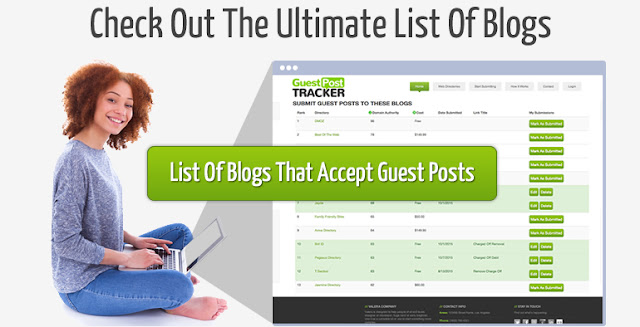
We are covered all area like Business | Finance | Career, Travel, Health&Beauty, Lifestyle, News&Magazine, Web | Tech | Mobile, .EDU, Food, Sport | Cars, Home&Garden, Shop | Fashion | Entertainment, Real Estate, Gaming, Adult & Dating, .DE, and more Guest post website niche that will help to improve your website ranking, traffic, DA and PA.
Here is the List of 1000+ Free Guest post website list with High Domain Authority and Do Follow backlinks.
Also Know: Latest Do follow Free Social Bookmarking Sites List 2016

Also Know: TOP FREE ARTICLE SUBMISSION SITES LIST WITH INSTANT APPROVAL
Instant Approval Directory Submission Sites

Just visit these all sites and fill all details and enter your website URL & Website name, Website description, fill your name. Now solve the captcha code and click on Submit.
http://www.facebook-list.com
http://www.ebay-dir.com
http://www.bestbuydir.com
http://www.target-directory.com
http://www.familydir.com
http://www.afunnydir.com
http://www.backpagedir.com
http://www.exampledir.com
http://www.lemon-directory.com
http://www.advancedseodirectory.com
http://www.apeopledirectory.com
http://www.businessfreedirectory.com
http://www.reddit-directory.com
http://www.domainnamesseo.com
http://www.craigslistdir.org
http://www.searchdomainhere.com
http://www.mediafiredirectlink.com
http://www.directoryanalytic.com
http://www.linkedin-directory.com
Backlink Is an Important Thing in Search Engine Optimization And Traffic. While commenting on Others sites and blogs. You can get get do follow backlinks for your blogs /sites for free. Increase Your Site /Blog Popularity By Using Top High PR Web 2.0.
Link building is the most essential part of the online marketing to increase the rank on the popular search engines. Whether it is the business website or blog, using the link building technique like comment posting on the blog posts and articles would be highly beneficial to easily and quickly increase the number of visitors. Building the links would be very simple by just inserting any anchor text link inside the content of the blogs or articles. Most of the persons are doing the same mistake that they are using the automated system for this link building and comment posting


Also Read - Huge collection of 600 high PR free classifieds sites list
These are all the 2017 popular comment posting blog sites for your needs. All sites are completely free to use to create your own blog and frequently posting your ideas and various posts.|
|
|
|
|
|
|
|
|
|
|
|
|
|
|
|
|
|
|
|
|
|
|
|
|
|
|
|
|
|
|
|
|
|
|
|
|
|
|
|
Subscribe to:
Posts (Atom)
Popular Post
-
 SEO Open Book Shared 1000+ Guest post Submission website list with High Domain Authority and Do Follow backlinks. Here is the List of 10...
 -
Instant Approval Directory Submission Sites Just visit these all sites and fill all details and enter your website URL & Website na...
Comments